" height="51.00000104325758px" id="dwbgYO9wY" transform="translate(0 34)" width="80.99999949550477px"/></svg>)
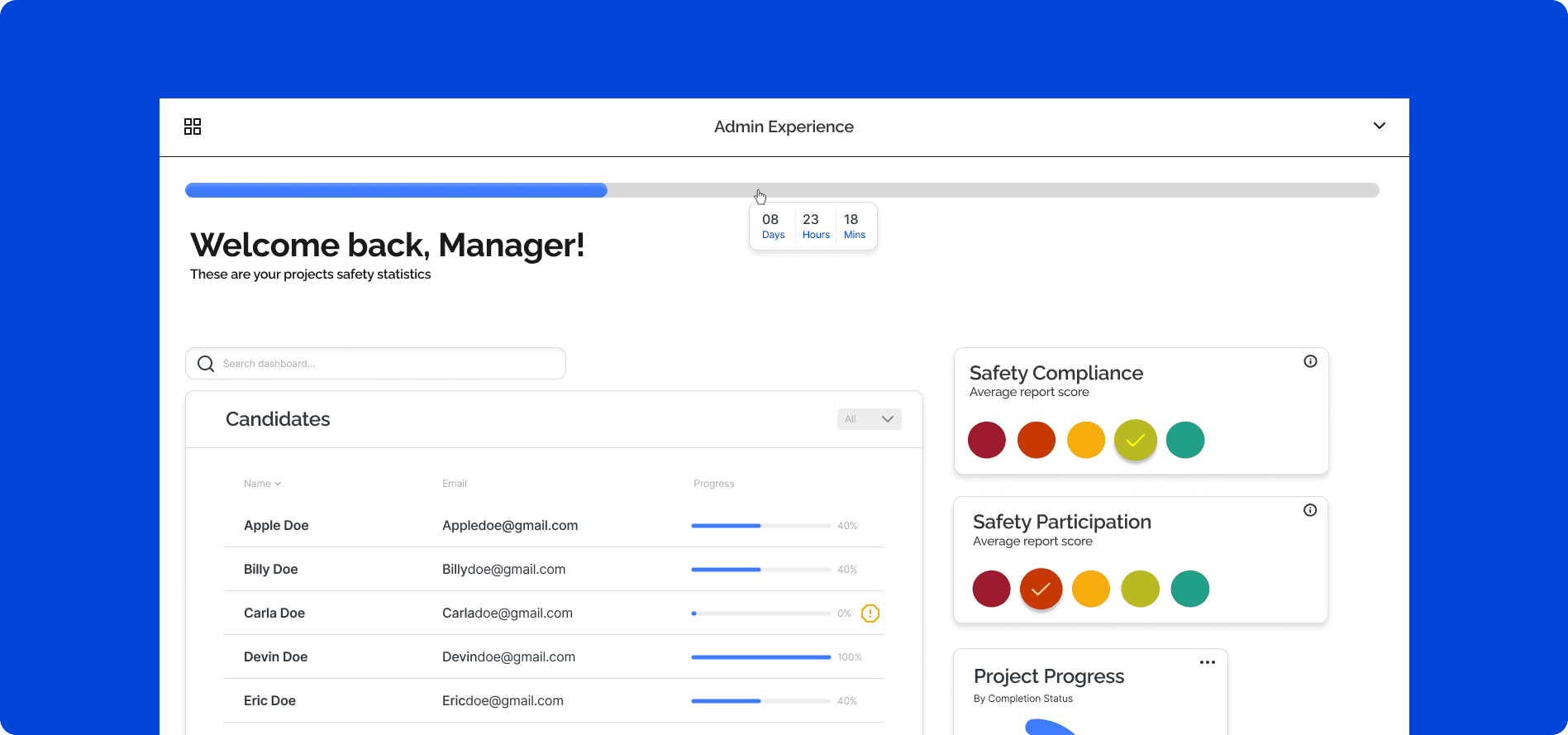
Driver safety analytics dashboard
Designing a data-driven system to support safety-critical decision-making.
This project explored how UX design can support clear, responsible decision-making in safety-critical environments.
The goal was to design an analytics dashboard that helps organisations identify driver risk, recognise patterns, and act early, rather than react after incidents occur. The focus was not on visualising data for its own sake, but on guiding attention to what matters most.
Problem
Organisations responsible for driver and fleet safety often rely on fragmented reports, spreadsheets, or static assessments to evaluate risk. This leads to:
Important risk signals being buried in
raw data
Difficulty identifying trends across drivers
High cognitive load when reviewing assessments
Slower or less confident safety decisions
In safety-critical contexts, poor data interpretation can directly impact real people and real outcomes.
Outcome
Design a dashboard that:
Surfaces high-risk drivers and
trends quickly
Reduces cognitive load in data-heavy
environments
Supports accountable, defensible
decisions
Balances overview with detailed
analysis
Works for non-technical, time-
constrained users
Role
UX/UI designer (end-to-end)
Timeline
3 days
Tools
Figma
UX Strategy
Prioritise Risk Over Completeness
Not all data is equally important. The interface highlights:
High-risk drivers
Concerning trends
Outliers requiring attention
Lower-priority information remains accessible, but never competes with critical signals.
The process began by understanding how safety decisions are actually made.
This reframed the dashboard as a decision-support tool, not a reporting interface.
Reduce Cognitive Load
The design focuses on:
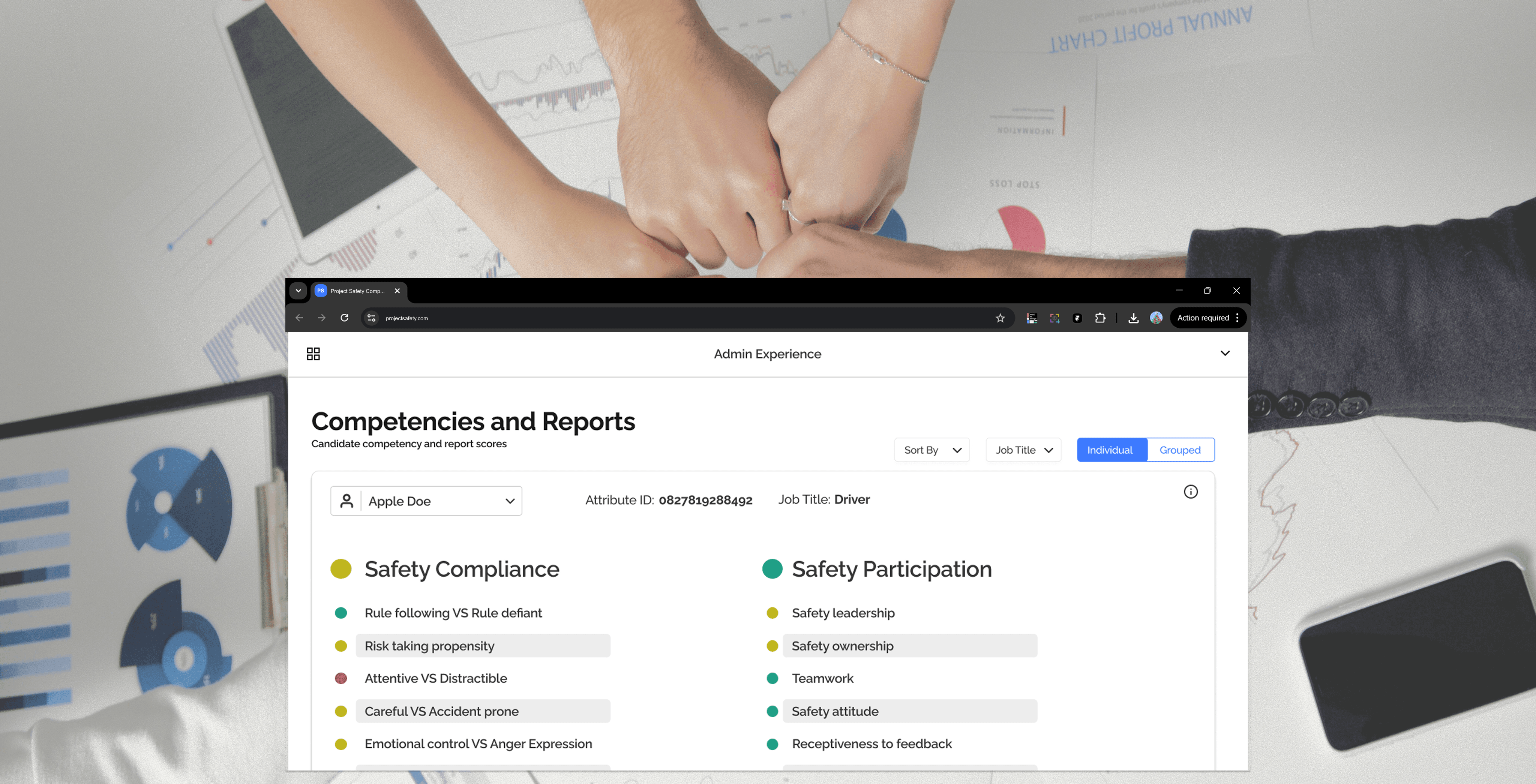
Clear hierarchy and spacing
Consistent visual language for risk levels
Simple, familiar chart types
Progressive disclosure of detail
Users can understand overall safety status at a glance, then drill down only when necessary.
Guided check-in.
Support Accountability
Because safety decisions have real-world consequences, the design:
Avoids ambiguous visual encoding
Makes data sources and scores clear
Encourages informed, traceable decisions rather than assumptions
Research, Concept,
Designs, User Testing
& prototype in 6 weeks
Part 1 - Discovery & Understanding
I explored the emotional challenges people face when trying to manage their wellbeing. Through interviews, surveys, and competitor analysis, I defined the core problem, identified key behaviours, and created the primary persona and scenarios that shaped the direction of the product.
I led the full end-to-end process — from early discovery to final prototype — integrating psychology, accessibility, and gamification to design an app that feels calm, credible, and motivating.... and this is how I did it!
Part 2 - Design
Using those insights, I developed the information architecture, mapped key flows, and created wireframes centred on empathy, psychology, accessibility, and gentle motivation. From there, I designed high-fidelity screens with a warm, calming visual language that made the experience feel simple and emotionally supportive.
Guided check-in.
Part 3 - Usability testing & Refinement
I validated the product through usability testing. Feedback helped refine the tone, visuals, and interactions — strengthening clarity, reducing friction, and confirming emotional resonance. These improvements increased confidence in the product’s impact and ease of use.
Research, Concept,
Designs, User Testing
& prototype in 6 weeks
Part 1 - Discovery & Understanding
I explored the emotional challenges people face when trying to manage their wellbeing. Through interviews, surveys, and competitor analysis, I defined the core problem, identified key behaviours, and created the primary persona and scenarios that shaped the direction of the product.
I led the full end-to-end process — from early discovery to final prototype — integrating psychology, accessibility, and gamification to design an app that feels calm, credible, and motivating.... and this is how I did it!
Part 2 - Design
Using those insights, I developed the information architecture, mapped key flows, and created wireframes centred on empathy, psychology, accessibility, and gentle motivation. From there, I designed high-fidelity screens with a warm, calming visual language that made the experience feel simple and emotionally supportive.
Guided check-in.
Part 3 - Usability testing & Refinement
I validated the product through usability testing. Feedback helped refine the tone, visuals, and interactions — strengthening clarity, reducing friction, and confirming emotional resonance. These improvements increased confidence in the product’s impact and ease of use.
Defining the need
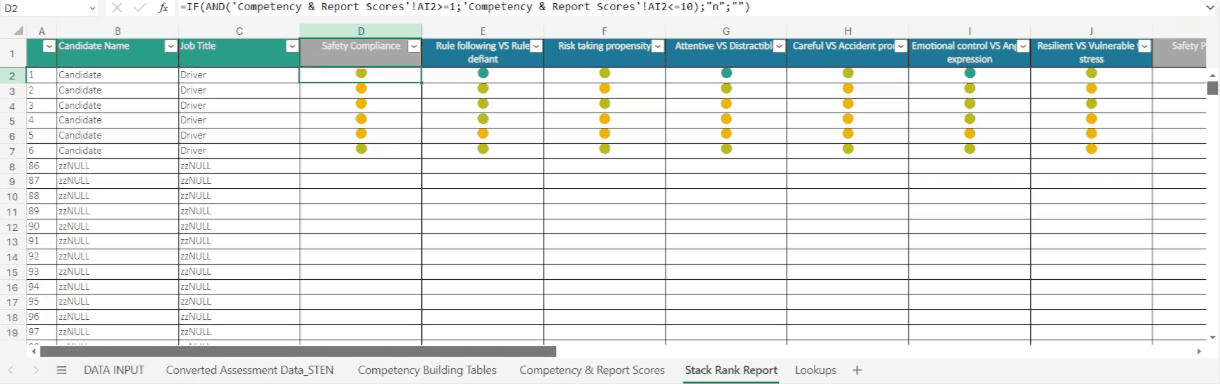
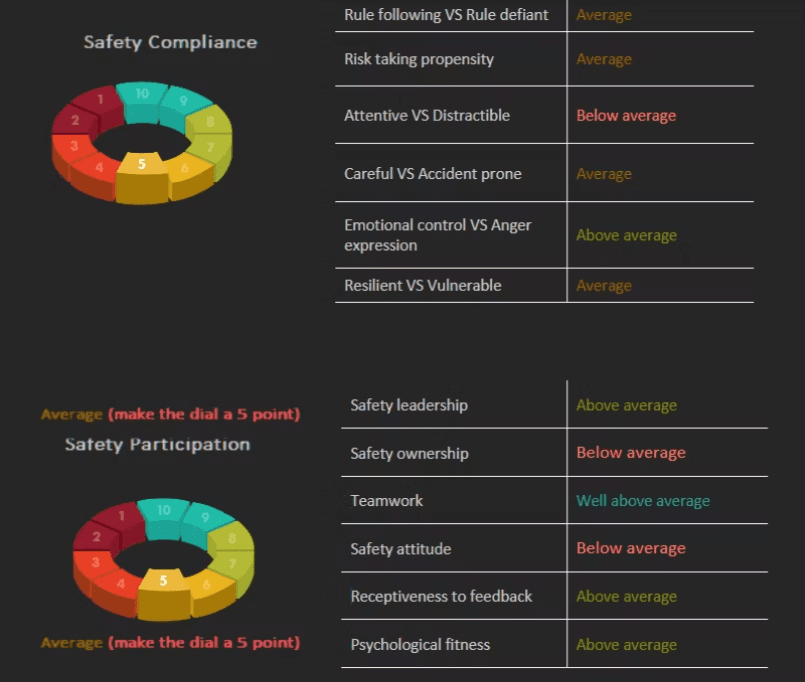
Combining all research, understanding where the users problems exist, and putting information into context -I could create a stack rank report and a compliance & participation scoring system.
Research, Concept,
Designs, User Testing
& prototype in 6 weeks
Part 1 - Discovery & Understanding
I explored the emotional challenges people face when trying to manage their wellbeing. Through interviews, surveys, and competitor analysis, I defined the core problem, identified key behaviours, and created the primary persona and scenarios that shaped the direction of the product.
I led the full end-to-end process — from early discovery to final prototype — integrating psychology, accessibility, and gamification to design an app that feels calm, credible, and motivating.... and this is how I did it!
Part 2 - Design
Using those insights, I developed the information architecture, mapped key flows, and created wireframes centred on empathy, psychology, accessibility, and gentle motivation. From there, I designed high-fidelity screens with a warm, calming visual language that made the experience feel simple and emotionally supportive.
Guided check-in.
Part 3 - Usability testing & Refinement
I validated the product through usability testing. Feedback helped refine the tone, visuals, and interactions — strengthening clarity, reducing friction, and confirming emotional resonance. These improvements increased confidence in the product’s impact and ease of use.
Research, Concept,
Designs, User Testing
& prototype in 6 weeks
Part 1 - Discovery & Understanding
I explored the emotional challenges people face when trying to manage their wellbeing. Through interviews, surveys, and competitor analysis, I defined the core problem, identified key behaviours, and created the primary persona and scenarios that shaped the direction of the product.
I led the full end-to-end process — from early discovery to final prototype — integrating psychology, accessibility, and gamification to design an app that feels calm, credible, and motivating.... and this is how I did it!
Part 2 - Design
Using those insights, I developed the information architecture, mapped key flows, and created wireframes centred on empathy, psychology, accessibility, and gentle motivation. From there, I designed high-fidelity screens with a warm, calming visual language that made the experience feel simple and emotionally supportive.
Guided check-in.
Part 3 - Usability testing & Refinement
I validated the product through usability testing. Feedback helped refine the tone, visuals, and interactions — strengthening clarity, reducing friction, and confirming emotional resonance. These improvements increased confidence in the product’s impact and ease of use.
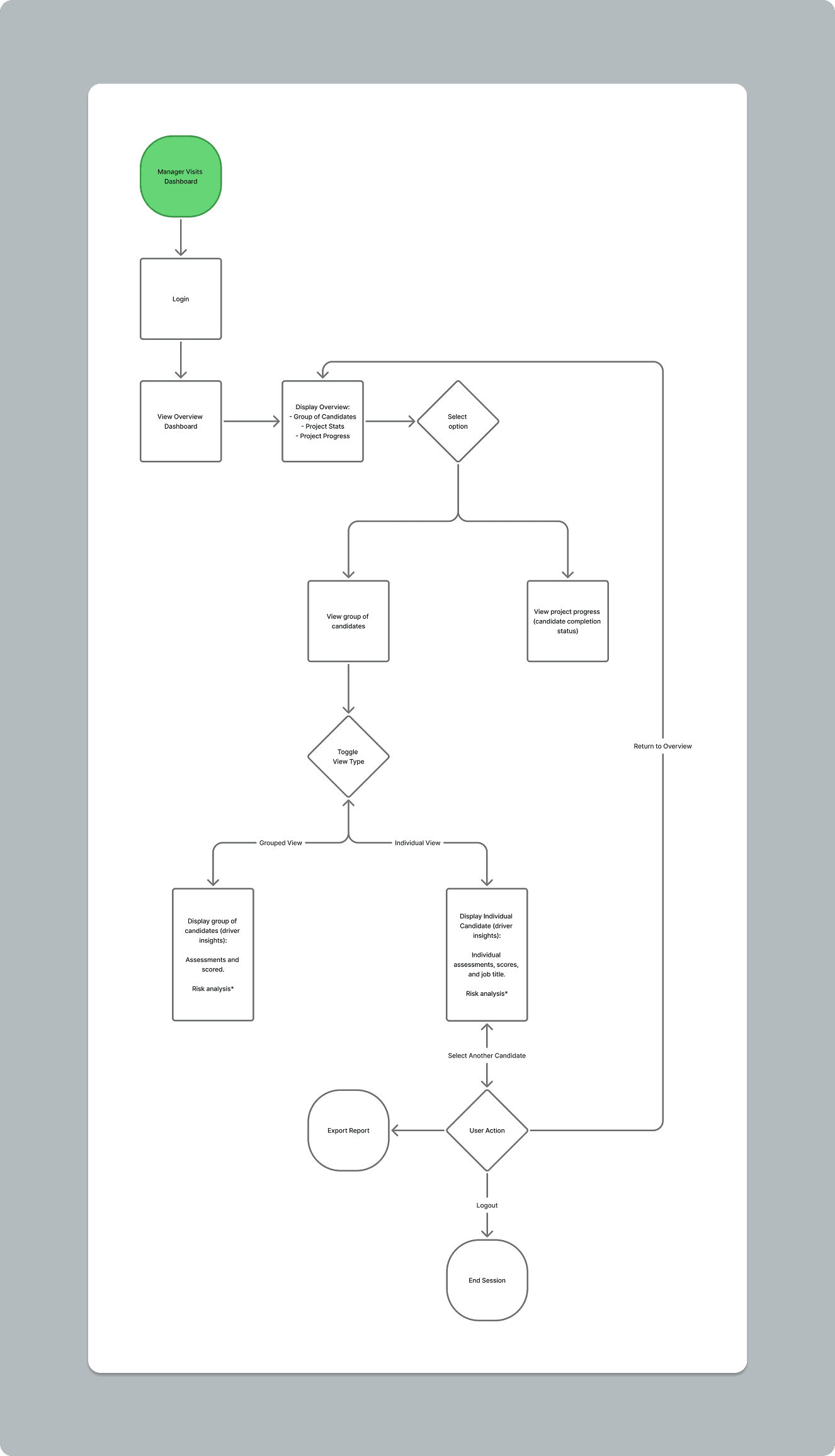
User flow
The dashboard follows a top-down decision flow:
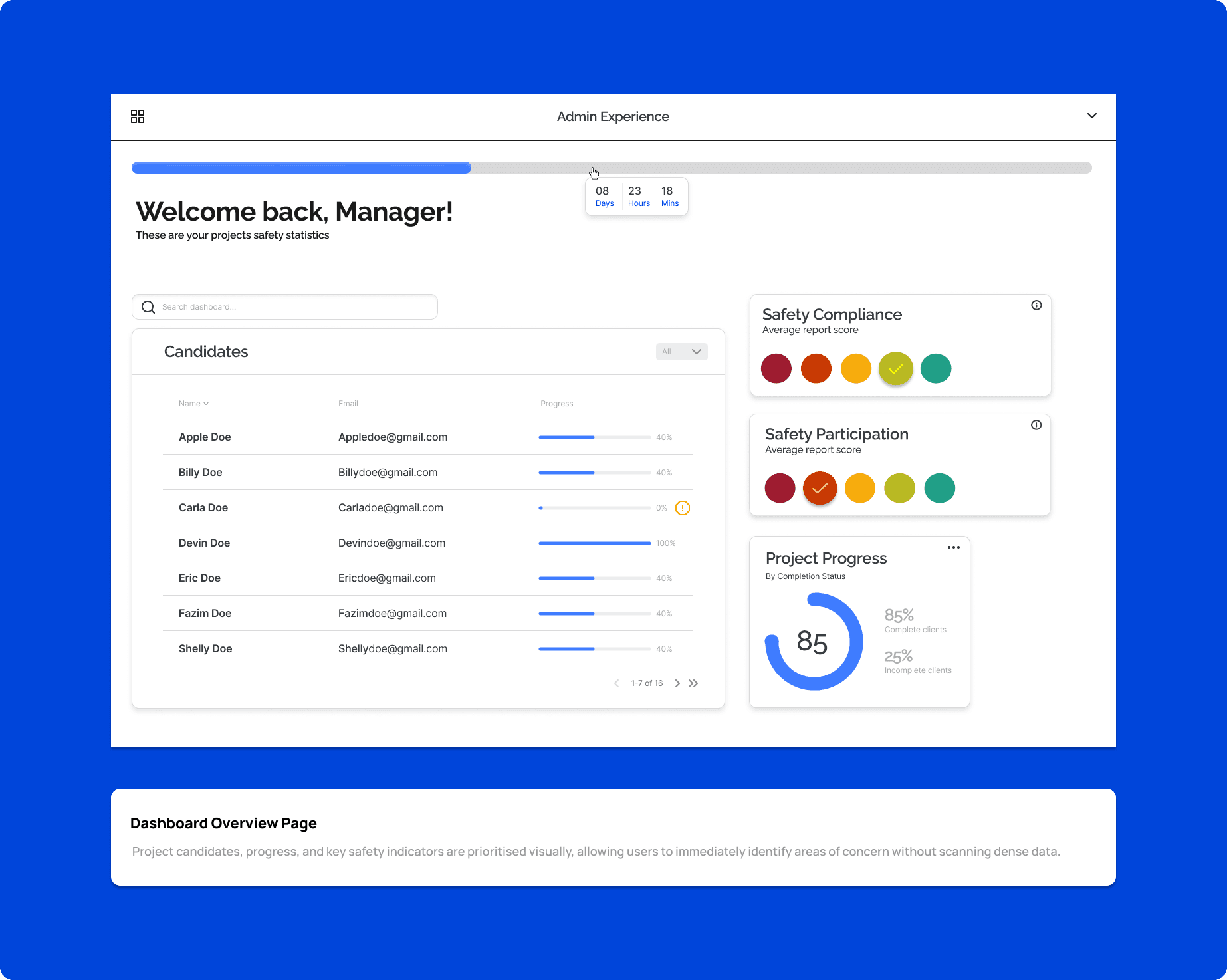
Overview — Overall safety status and key indicators
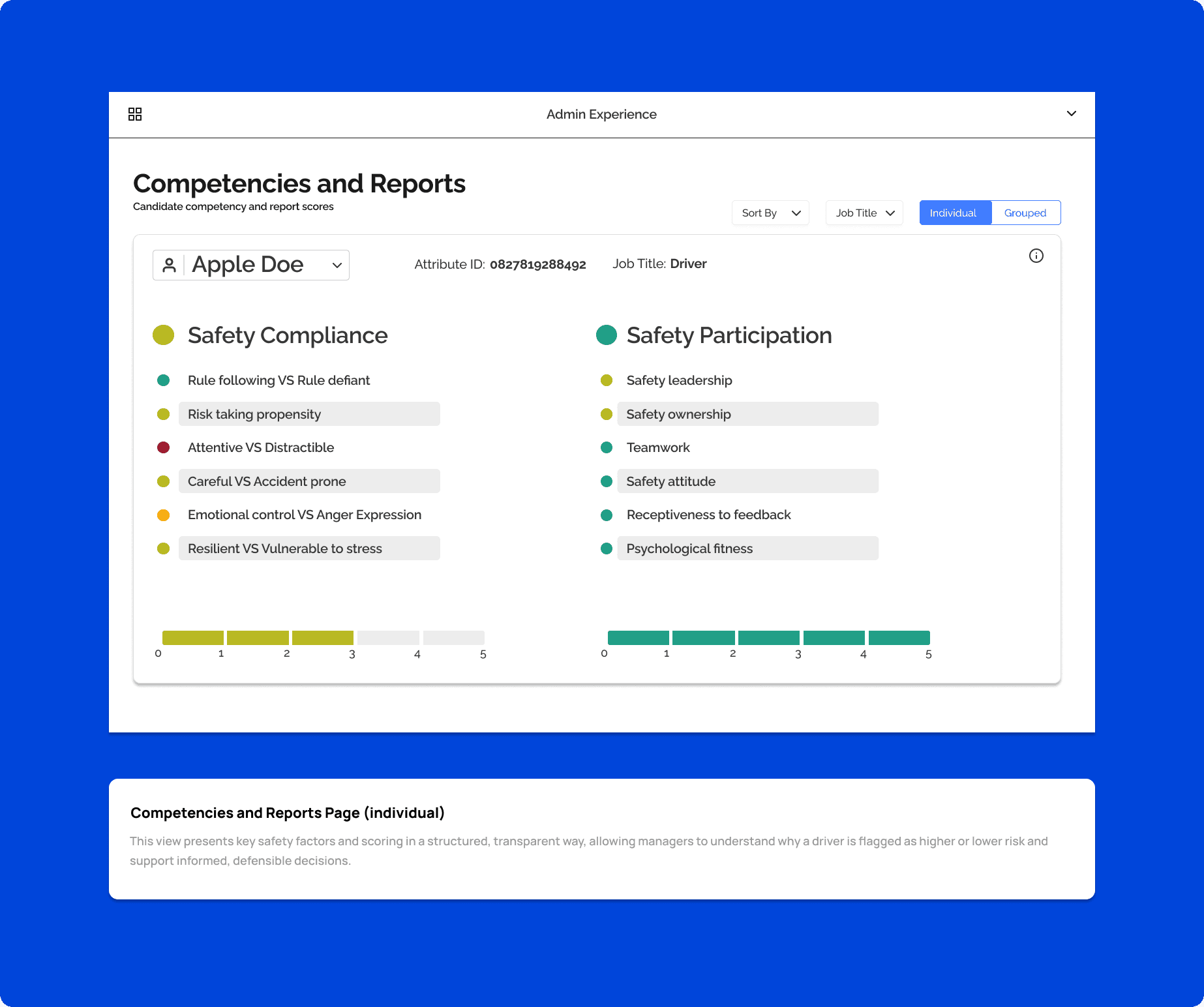
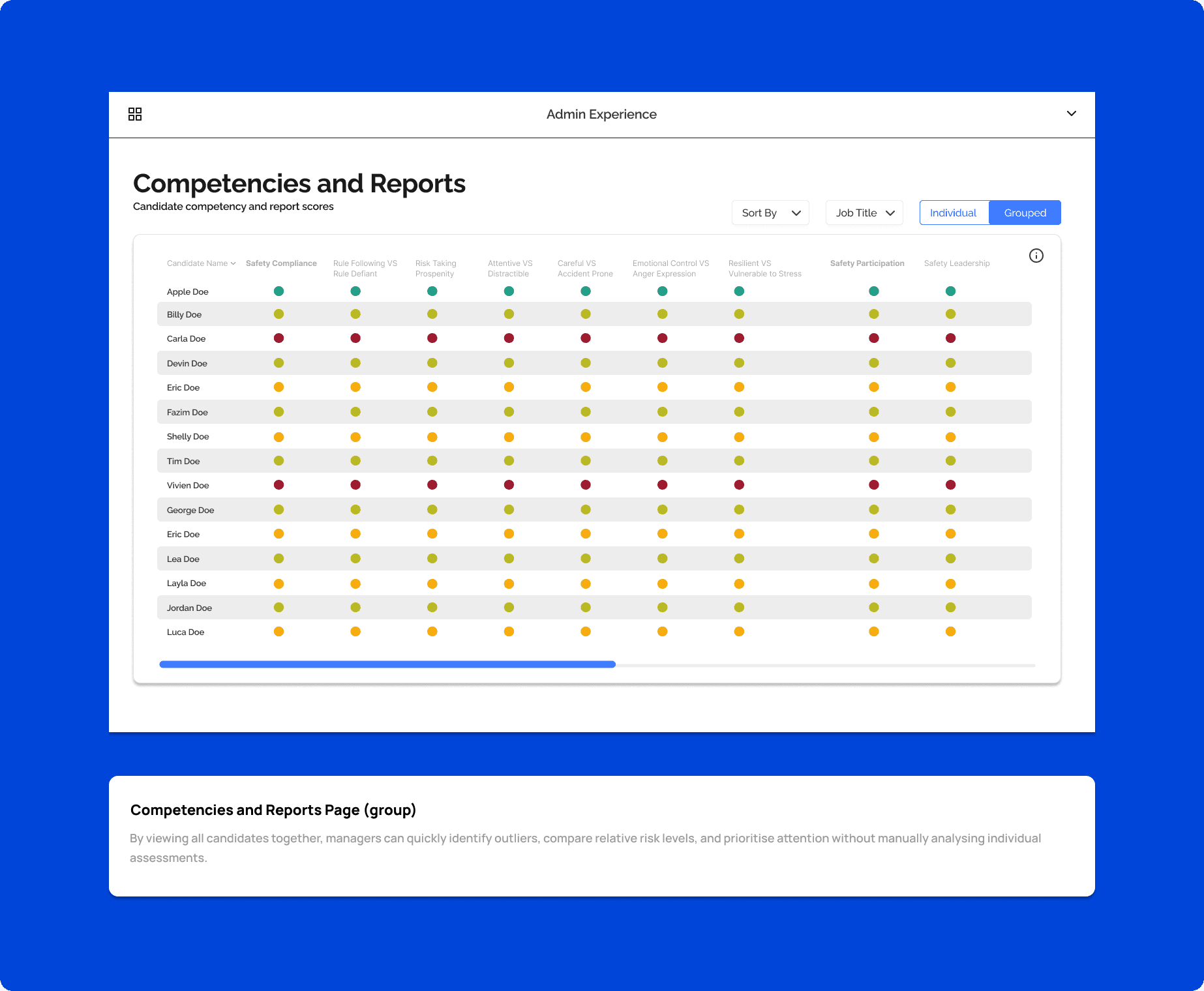
Driver Insights — Individual driver assessments and scores
Risk Analysis — Trends, patterns, and emerging risks
Reports — Exportable summaries for review and compliance
This mirrors how safety managers move from awareness → investigation → action.
Research, Concept,
Designs, User Testing
& prototype in 6 weeks
Part 1 - Discovery & Understanding
I explored the emotional challenges people face when trying to manage their wellbeing. Through interviews, surveys, and competitor analysis, I defined the core problem, identified key behaviours, and created the primary persona and scenarios that shaped the direction of the product.
I led the full end-to-end process — from early discovery to final prototype — integrating psychology, accessibility, and gamification to design an app that feels calm, credible, and motivating.... and this is how I did it!
Part 2 - Design
Using those insights, I developed the information architecture, mapped key flows, and created wireframes centred on empathy, psychology, accessibility, and gentle motivation. From there, I designed high-fidelity screens with a warm, calming visual language that made the experience feel simple and emotionally supportive.
Guided check-in.
Part 3 - Usability testing & Refinement
I validated the product through usability testing. Feedback helped refine the tone, visuals, and interactions — strengthening clarity, reducing friction, and confirming emotional resonance. These improvements increased confidence in the product’s impact and ease of use.
Research, Concept,
Designs, User Testing
& prototype in 6 weeks
Part 1 - Discovery & Understanding
I explored the emotional challenges people face when trying to manage their wellbeing. Through interviews, surveys, and competitor analysis, I defined the core problem, identified key behaviours, and created the primary persona and scenarios that shaped the direction of the product.
I led the full end-to-end process — from early discovery to final prototype — integrating psychology, accessibility, and gamification to design an app that feels calm, credible, and motivating.... and this is how I did it!
Part 2 - Design
Using those insights, I developed the information architecture, mapped key flows, and created wireframes centred on empathy, psychology, accessibility, and gentle motivation. From there, I designed high-fidelity screens with a warm, calming visual language that made the experience feel simple and emotionally supportive.
Guided check-in.
Part 3 - Usability testing & Refinement
I validated the product through usability testing. Feedback helped refine the tone, visuals, and interactions — strengthening clarity, reducing friction, and confirming emotional resonance. These improvements increased confidence in the product’s impact and ease of use.
Presenting
The final design
The final design demonstrates how thoughtful UX can:
Improve the speed and confidence of safety decisions
Reduce cognitive strain in data-heavy tools
Support proactive intervention rather than reactive reporting
The dashboard shifts focus from reviewing data to acting on insights.
Research, Concept,
Designs, User Testing
& prototype in 6 weeks
Part 1 - Discovery & Understanding
I explored the emotional challenges people face when trying to manage their wellbeing. Through interviews, surveys, and competitor analysis, I defined the core problem, identified key behaviours, and created the primary persona and scenarios that shaped the direction of the product.
I led the full end-to-end process — from early discovery to final prototype — integrating psychology, accessibility, and gamification to design an app that feels calm, credible, and motivating.... and this is how I did it!
Part 2 - Design
Using those insights, I developed the information architecture, mapped key flows, and created wireframes centred on empathy, psychology, accessibility, and gentle motivation. From there, I designed high-fidelity screens with a warm, calming visual language that made the experience feel simple and emotionally supportive.
Guided check-in.
Part 3 - Usability testing & Refinement
I validated the product through usability testing. Feedback helped refine the tone, visuals, and interactions — strengthening clarity, reducing friction, and confirming emotional resonance. These improvements increased confidence in the product’s impact and ease of use.
Research, Concept,
Designs, User Testing
& prototype in 6 weeks
Part 1 - Discovery & Understanding
I explored the emotional challenges people face when trying to manage their wellbeing. Through interviews, surveys, and competitor analysis, I defined the core problem, identified key behaviours, and created the primary persona and scenarios that shaped the direction of the product.
I led the full end-to-end process — from early discovery to final prototype — integrating psychology, accessibility, and gamification to design an app that feels calm, credible, and motivating.... and this is how I did it!
Part 2 - Design
Using those insights, I developed the information architecture, mapped key flows, and created wireframes centred on empathy, psychology, accessibility, and gentle motivation. From there, I designed high-fidelity screens with a warm, calming visual language that made the experience feel simple and emotionally supportive.
Guided check-in.
Part 3 - Usability testing & Refinement
I validated the product through usability testing. Feedback helped refine the tone, visuals, and interactions — strengthening clarity, reducing friction, and confirming emotional resonance. These improvements increased confidence in the product’s impact and ease of use.
This project strengthened my ability to design for risk, accountability, and complexity.
It reinforced that effective enterprise UX is not about adding features, but about helping users make clear, defensible decisions
especially when those decisions affect real people.
Final reflections &
insights
Behind the design
Usability Testing
Feedback showed that users could:
Quickly identify high-risk drivers
Understand trends without manual analysis
Navigate between overview and detail with confidence
Testing focused on interpretability and clarity, rather than aesthetics.