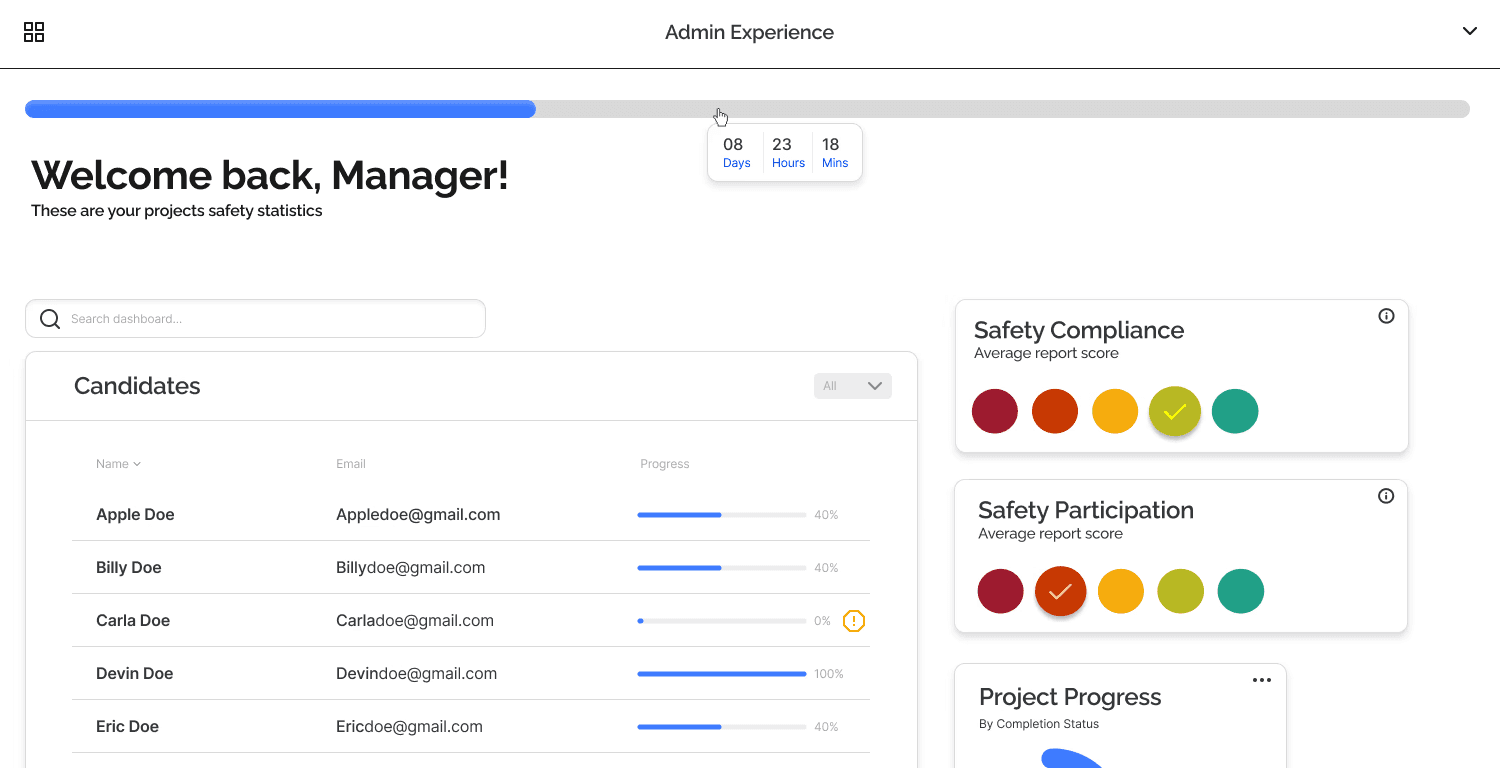
Driver safety analytics dashboard
Designing a rapid decision-support system to assess driver suitability and risk
This project was completed as part of a rapid tender process for Engen. The goal was to design a clear, credible system that could help assess driver suitability and safety risk, supporting early decision-making rather than full product development.
Problem
Engen needed a way to quickly and consistently assess whether driver candidates would be suitable to operate within their safety standards.
Existing information was fragmented across documents and spreadsheets, making it difficult to form a clear view of risk, compliance, and readiness.
This challenge was further constrained by the tender context:
Tight timelines
Limited access to end users
The need to demonstrate feasibility and clarity quickly
Objective
Design a clarity-first dashboard concept that enables managers to:
Assess driver suitability at a glance
Interpret safety and competency indicators consistently
Make informed decisions without manually interpreting raw data
The goal was to support confident decision-making, not long-term optimisation.
Role
UX/UI designer (end-to-end) in collaboration with a data analyst.
Responsabilities
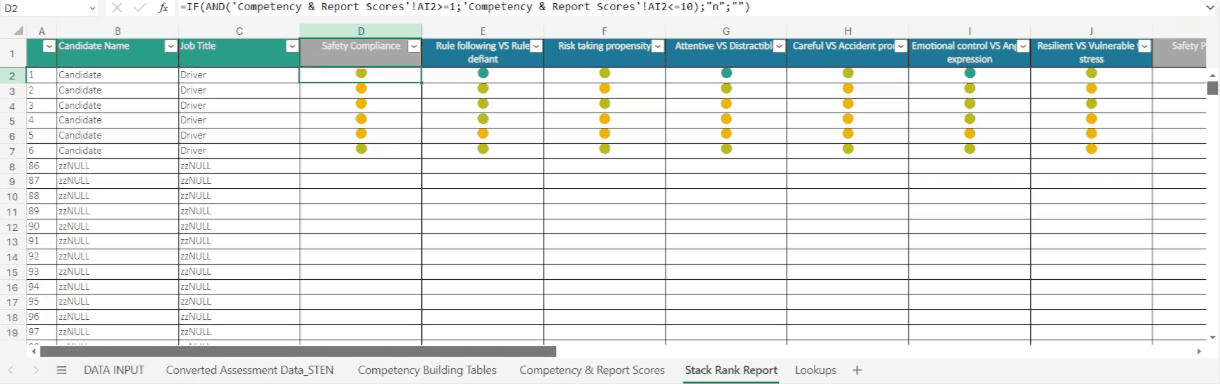
Structuring complex safety and competency data
Defining information hierarchy and user flows
Designing a clear, scannable dashboard interface
Translating tender requirements into a usable system concept
Timeline
5 days
Tools
Figma
UX Strategy
Every design decision was evaluated against one question:
Can a manager confidently make a decision using this interface?
Given the safety-critical and time-constrained context,
the UX strategy focused on:
Reducing cognitive load while presenting complex data
Making risk immediately visible without overwhelming
usersSupporting both quick scanning and deeper investigation
Designing for trust, consistency, and accountability
Understanding Key
Safety Needs
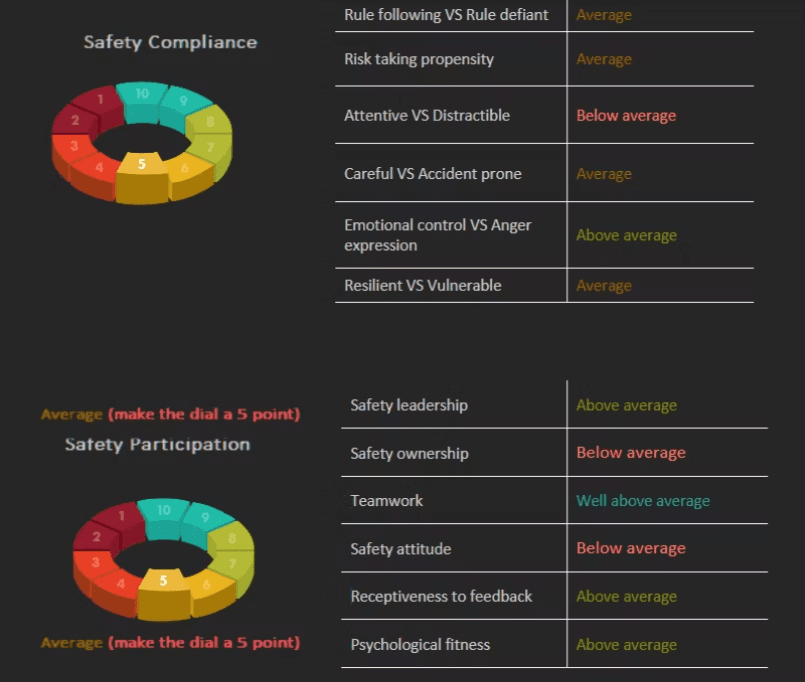
Early exploration focused on understanding what decision-makers needed when assessing drivers, rather than exposing raw data.
Key considerations included:
Overall safety compliance
Competency coverage across required criteria
Indicators of potential risk or concern
The intent was to surface meaningful signals, not overwhelm
users with numbers.
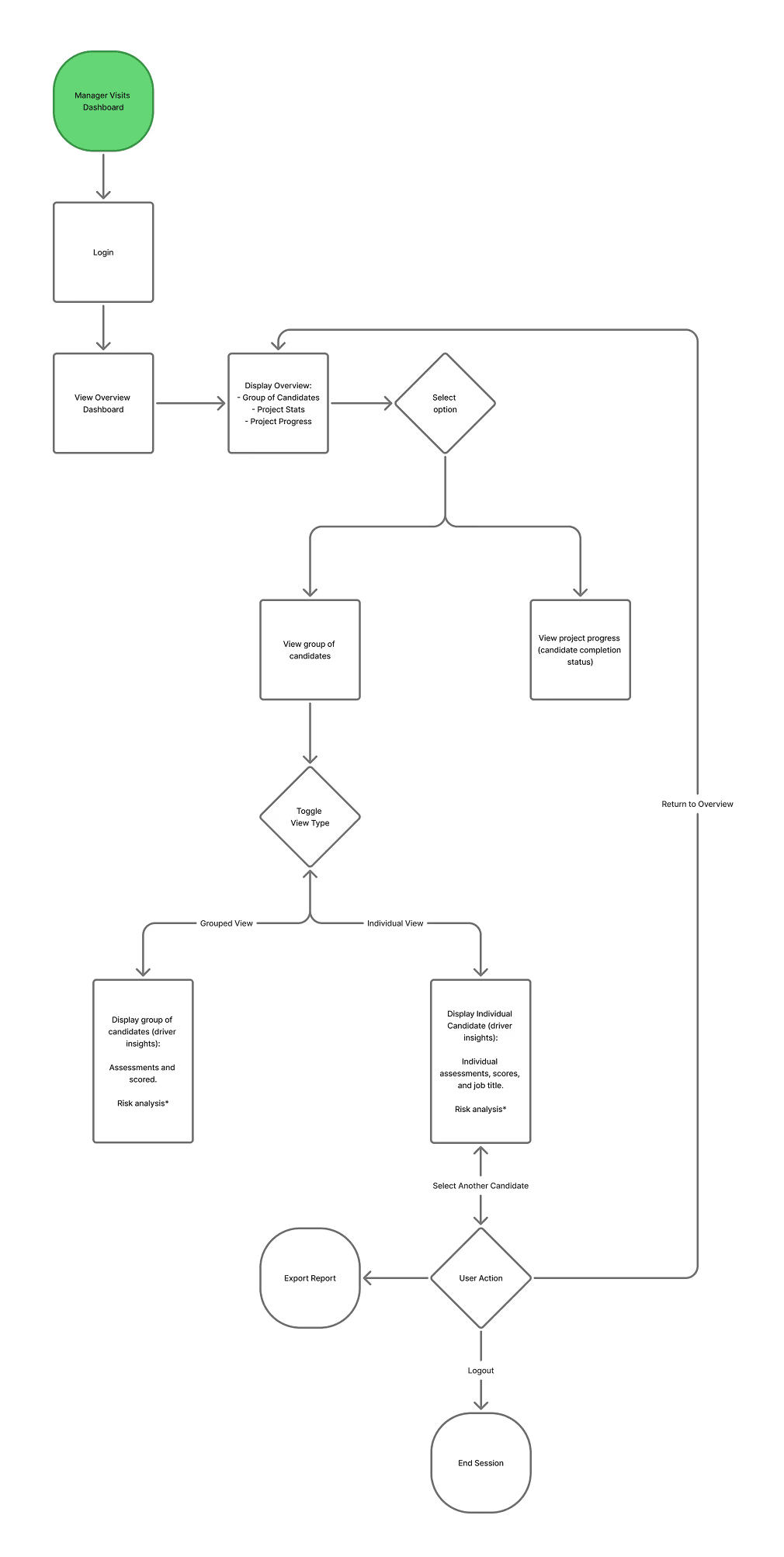
Decision-Led User Flow
The user flow was designed to support both rapid checks and deeper review, depending on the situation.
The Initial views prioritise high-level awareness and risk signals,
whilst subsequent steps allow managers to drill into detailed driver information when needed
Decision points were intentionally limited to reduce friction and support fast, confident judgment in operational environments.
Final Design
Solution (below)
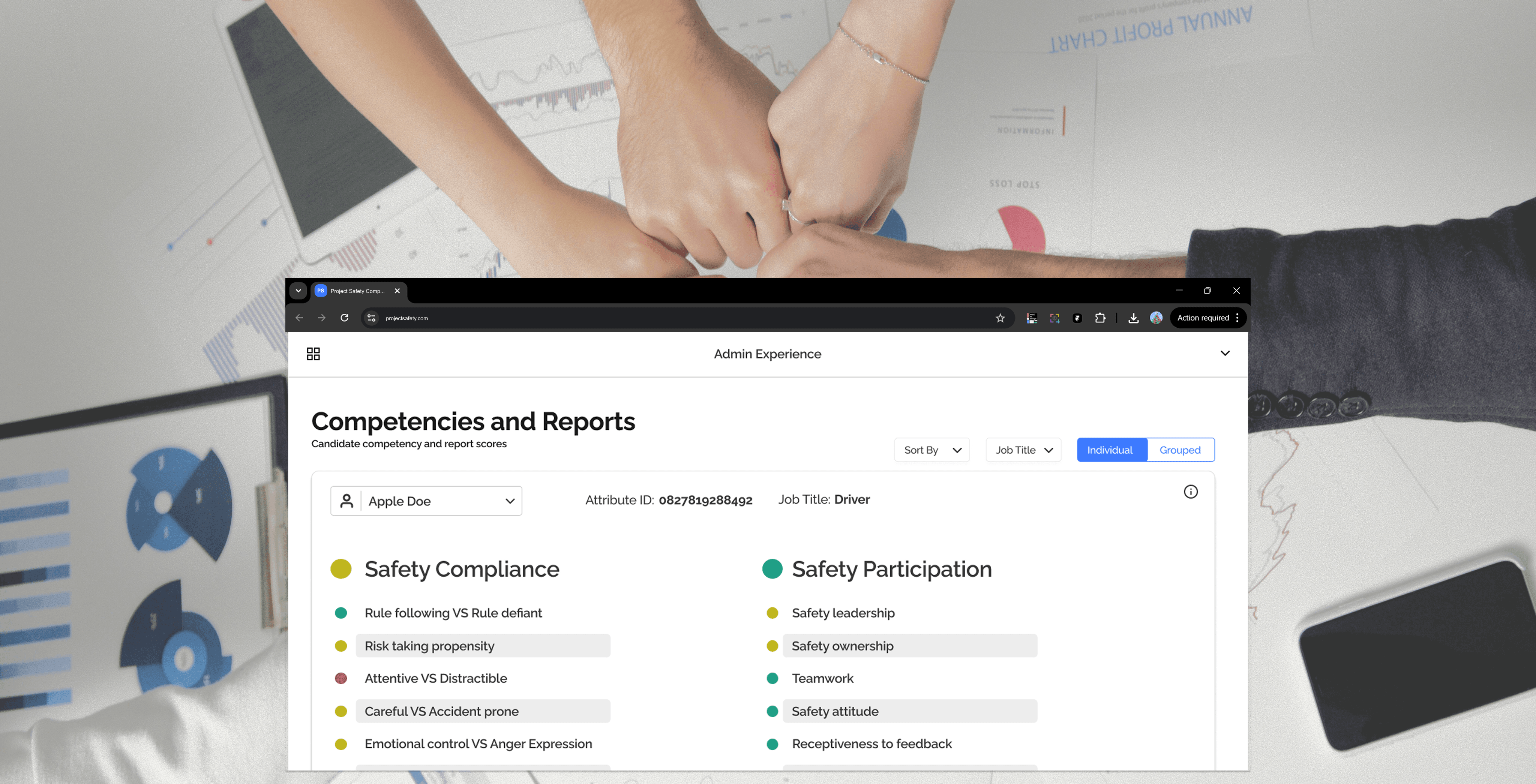
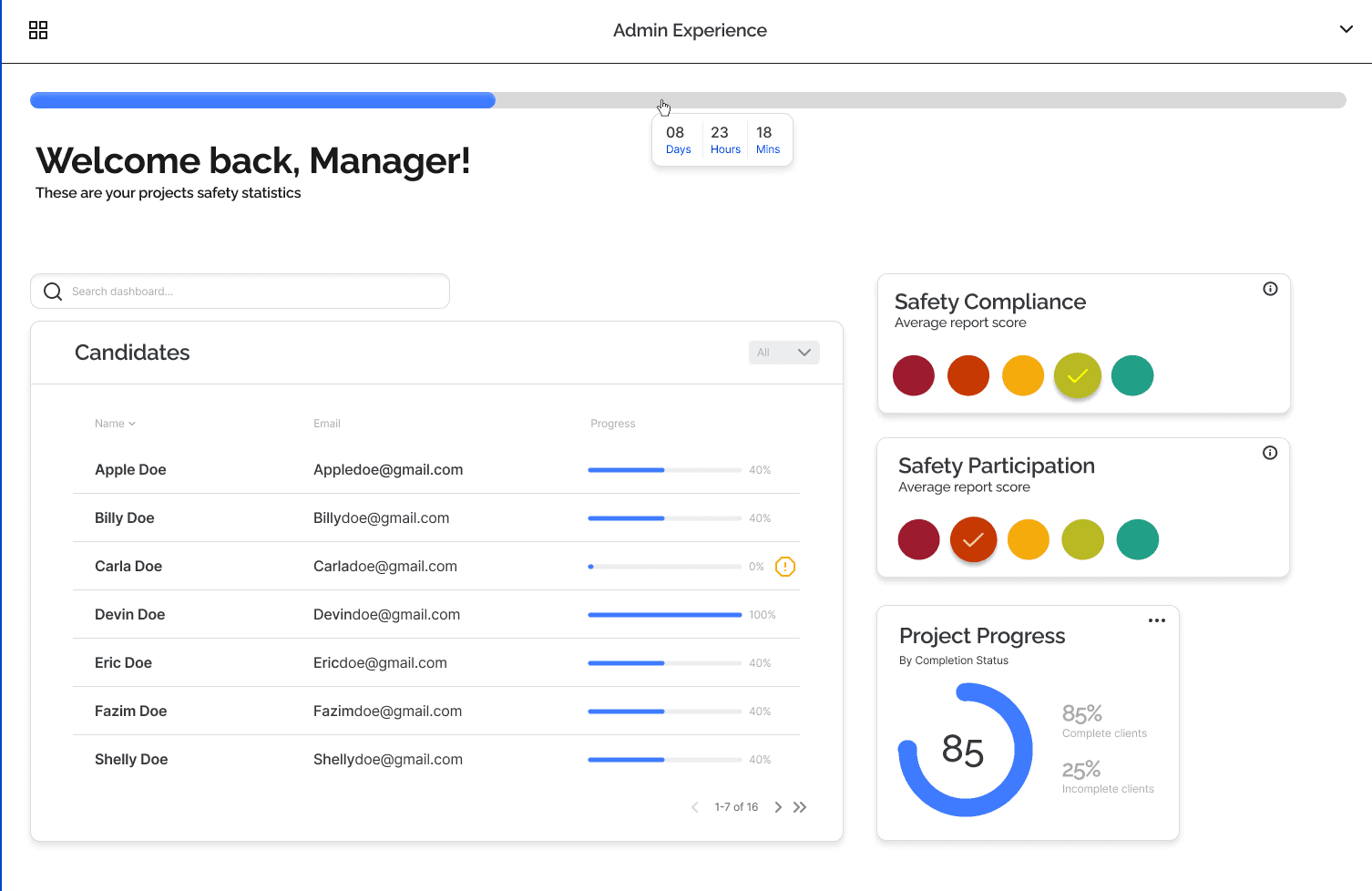
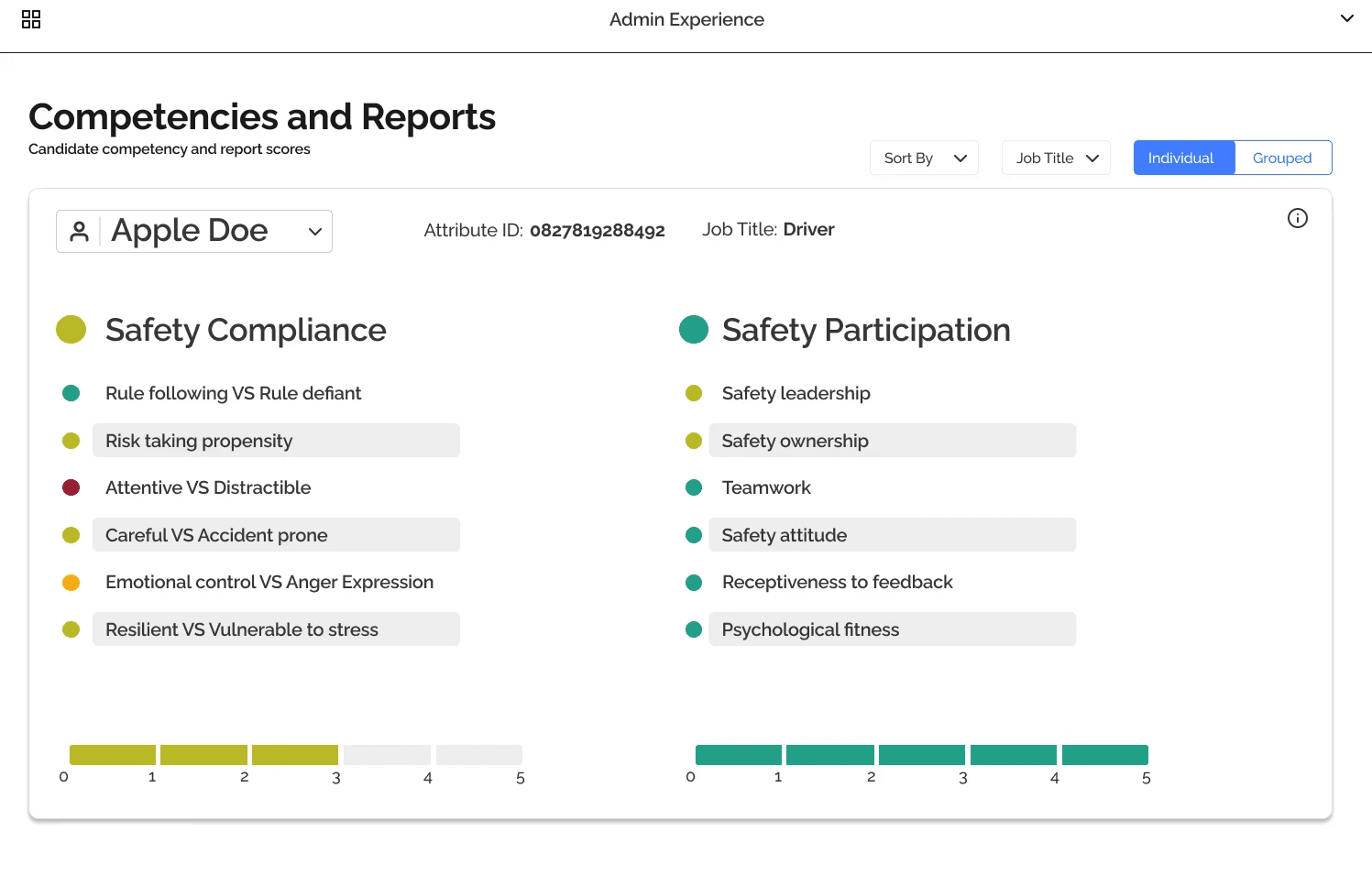
The final dashboard concept prioritises clarity, consistency, and scannability.
While the underlying scoring and risk logic was defined by the data team, the interface was designed to help managers interpret and act on these insights quickly and confidently.
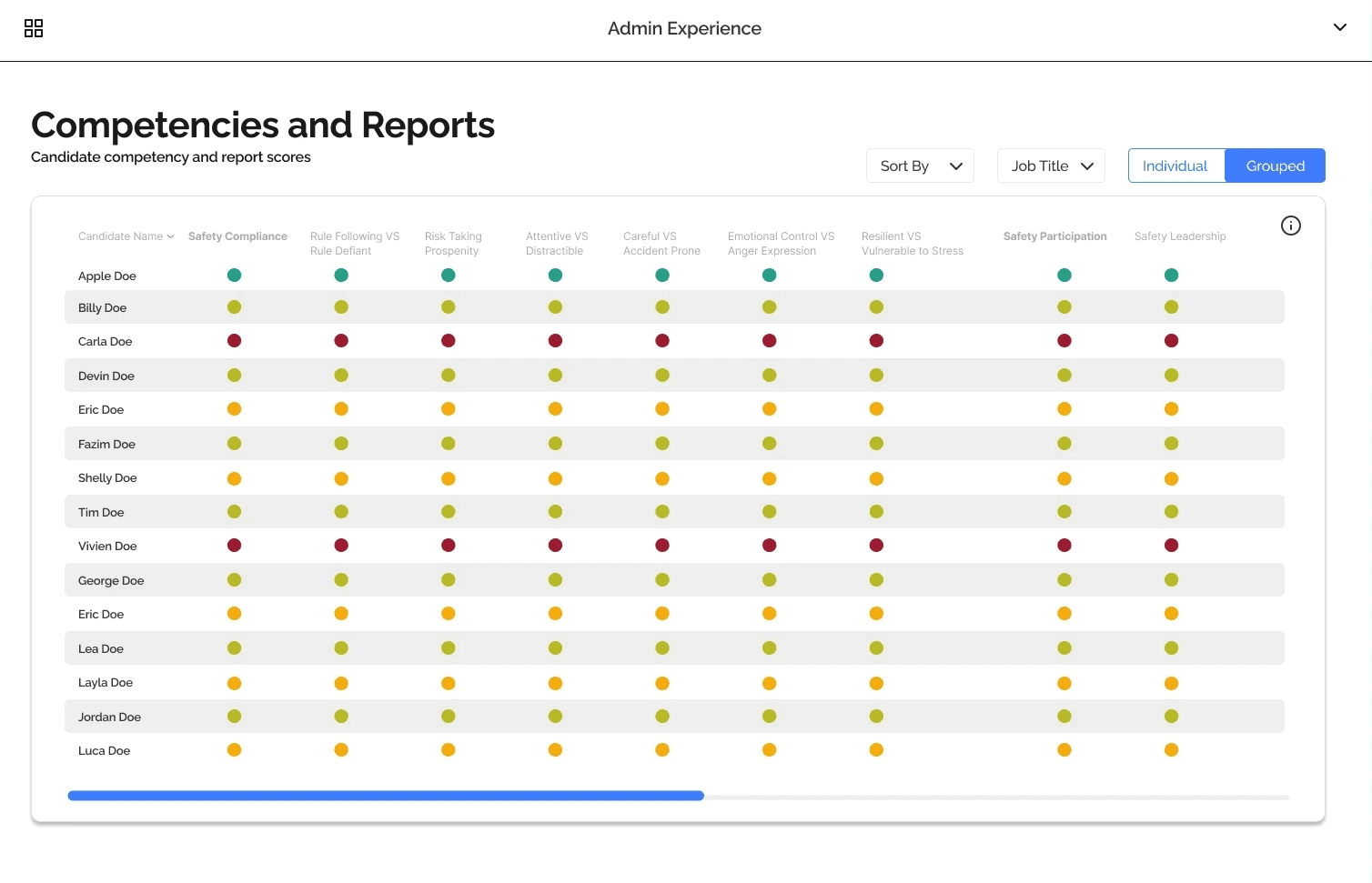
The dashboard enables managers to:
Identify high-risk drivers through clear visual indicators
Compare safety and competency status across candidates
Drill down into detailed reports when further assessment
is requiredMaintain oversight without switching between tools
Usability Validation
Given the tender context, lightweight validation was
conducted with internal stakeholders.
The goal of testing was to validate decision support, not
the accuracy of underlying data models.
Feedback confirmed that:
Clear visual grouping improved scannability.
Consistent colour usage helped surface risk indicators.
Simplified layouts reduced the time needed to assess driver suitability.
Understand trends without manual analysis.



Final reflections
& Learnings
Behind the design
This project reinforced the importance of restraint and clarity when designing safety-critical systems.
Working within a tender environment strengthened my ability to:
Design effectively under tight constraints
Prioritise decision-making over feature depth
Collaborate closely with data specialists
Translate complex requirements into clear, usable interfaces
It further shaped my approach to enterprise and decision-support UX, particularly in regulated and safety-focused contexts.
